IJPAM: Volume 2, No. 1 (2002)
THE USE OF TANGENT VECTOR FIELDS
 , János Sztrik
 University of Trier
Dept. IV, D-54286 Trier, GERMANY
e-mail: baum@uni-trier.de
Institute of Mathematics and Informatics
University of Debrecen
Debrecen, P.O.Box 12, H-4010, HUNGARY
e-mail: jsztrik@math.klte.hu
Abstract.Recently, no-waiting stations with spatial
arrival process and arbitrary service time distribution
have been analyzed [#!Baum2!#], [#!BaKa1!#]. Such stations
represent adequate models of, for example, mobile
communication networks based on code division multiple
access (CDMA) techniques. Also, the inclusion of customer
movements in space in such models has been performed. In
[#!BaKa2!#], [#!BaKa3!#], movements were represented as
group operations, which mapped a region  of interest
into itself. In this paper we present a method to construct
these group operations by means of velocity tangent vector
fields. Field curves are to be interpreted as curves along
which customers move. We show, how the varying behaviour of
customers in space (e.g. calls in progress in a mobile communication
network model) in a system fed by a spatial arrival
process can be adequately described. Former results allow
to compute the transient as well as equilibrium distribution
of numbers of customers in any Borel subset of
.
of interest
into itself. In this paper we present a method to construct
these group operations by means of velocity tangent vector
fields. Field curves are to be interpreted as curves along
which customers move. We show, how the varying behaviour of
customers in space (e.g. calls in progress in a mobile communication
network model) in a system fed by a spatial arrival
process can be adequately described. Former results allow
to compute the transient as well as equilibrium distribution
of numbers of customers in any Borel subset of
.
Received: January 8, 2002
AMS Subject Classification: 60K25, 60K30, 90B18
Key Words and Phrases: mobile communication, CDMA, tangent vector fields, spatial arrival processes,
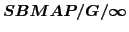 and
and
 models
Source: International Journal of Pure and Applied Mathematics
ISSN: 1311-8080
Year: 2002
Volume: 2
Issue: 1

